
WS100
Compact Wide-Range Spectrometer
The WS100 is a versatile, wide-range spectrometer that serves as an essential tool in scientific laboratories, educational settings at colleges and universities, and even in field applications.
Extremely wide range – 190 to 1100 nm – covered with the use of one diffraction grating
Combination of compact design and high resolution
User-friendly interface compatible with Windows 2000/XP/7/8/10
No external power requirements high resolution spectrometer
Key Features:
Compact, reliable, and easy to use: the WS100 contains no moving parts, is pre-calibrated at the factory, and is powered and controlled via Full-Speed USB, ensuring fast setup and dependable operation.
Triggering capability: the device can be triggered from an external light source using standard TTL pulses via BNC-58, and it can also generate TTL triggers itself.
Flexible light input: the WS100 can operate with or without optical fiber input. When not using fiber, analyzed light can be directed straight into the input slit.
Standard delivery set includes:
USB control cable
Direct and reverse synchronization cables
UV optical fiber
Optional accessory: Order sorting filter to suppress higher spectral orders (available upon request)
-
The WS100 spectrometer stands out for its use of an original concave diffraction grating, allowing it to deliver high resolution (1 nm) across an exceptionally broad spectral range from 190 to 1100 nm.
-
The performance of the WS100 depends significantly on the installed image sensor:
WS100-3648T and WS100-2048T
Equipped with Toshiba linear sensors TCD1304 and TCD1205, these versions offer high sensitivity and fine resolution due to a high pixel count. However, they may show spectrum modulation when recording broadband spectra, which can limit applications in certain spectrometric tasks.WS100 with Hamamatsu Sensors (S13496-4096 or S11639-2048)
These models provide superior linearity, a wide dynamic range, and no spectrum modulation, making them ideal for high-precision applications requiring clean spectral output.
-
The WS100 supports a broad range of accessories that enable efficient light collection from both close-range samples and distant sources, including:
Condenser PS-2
Optimized for collecting light from samples at 40 mm distance within a broad spectral range and efficiently transmitting it into an optical fiber or through an entrance slit.Condenser PS-3
Designed for 29 mm working distance, offering a wide aperture angle and efficient coupling into a fiber or entrance slit.Adapter FA-1
Achromatic adapter for focusing a parallel light beam into a fiber using 3D alignment.Adapter FA-2
Achromatic adapter with axial alignment, ideal for focusing parallel beams into optical fibers.Cassegrain Objectives
Suitable for capturing light from distant objects located between 3.5 meters to infinity.
Diffuse Attenuator FA-3
Used to reduce laser beam intensity before it is delivered into a fiber.Cuvette Holder FA-10 and DipProbes
For handling liquid samples, these accessories include interchangeable probe tips and fiber-optic immersion probes for flexible use in various measurement conditions. wide range spectrometer
-
The WS100 software enables user calibration of spectral sensitivity within a selected range. Factory calibration of spectral sensitivity is not included as standard.
Options & Accessories
Upon request, the WS100 spectrometer can be equipped with a high-order separating compound filter, specially designed for working with broadband spectra.
Additionally, it can be supplied with VUV or FWF optical fibers of various lengths, tailored to your specific setup requirements.
-
Laser wavelength control
Plasma control
Analysis of any light source across wide spectral range of 190–1100 nm using a spectrometer
Ws100 TECHNICAL FEATURES:
-
Diffraction Grating, Grooves/mm: 300
Reciprocal dispersion (average), nm/mm: 33.28
-
F/Number: 1:6
Focal Length, mm: 99
Detection & Image Sensor
| Spectral range, nm | 190–1100 | 190–1000 | 200–1000 |
| Spectral resolution (average), nm | 1.0 | 1.0 | 1.5 |
| Linear image sensor | CCD TCD1304 Toshiba (3648 pixels) | CMOS S13496 Hamamatsu (4096 pixels) | CMOS S11639-1 Hamamatsu (2048 pixels) |
| Pixel size, µm | 8 × 200 | 7 × 200 | 14 × 200 |
| Active area, mm | 29.184 | 28.672 | 28.672 |
| Minimal exposure time, ms | 7.4 | 0.018 | 0.018 |
| Maximal exposure time, s1) | 3 | 5 | 5 |
| Antiblooming2) | No | Yes | Yes |
| Photo response non-uniformity, %3) | ±5% | ±2% | ±2% |
| Dynamic range | 2000:1 | 5000:1 | 5000:1 |
| Photo sensitivity, V/(lx·s) | 160 | 650 | 1300 |
| Mean-square reading noise, counts | <8 | <4 | <4 |
| Data rate (max), kHz | 500 | 3000 | 3000 |
ADC Resolution of bits: 16 bits, 65536 counts
1) Max. exposure time is the time when the dark signal constitutes 25% of the dynamic range at +250C ambient.
2) Antiblooming is a sensor feature eliminating charge overflow from exposed pixels to surrounding pixels.
3) Signal level reaches 50% of dynamic range.
-
Triggering: internal/external
Requirements to external trigger pulse:
BNC-58 connector, positive polarity, 3-15 VDC amplitude,
5-20 µs pulse duration FWHMTrigger pules parameters:
positive polarity, 4-5 VDC amplitude, 10 µs pulse duration FWHM
-
Optical Input: Direct radiation input to the entrance
-
PC connection: Full-Speed USB
-
Dimensions, mm: 66 × 86 × 146
Weight, kg: 0.75
Similar Products:
-
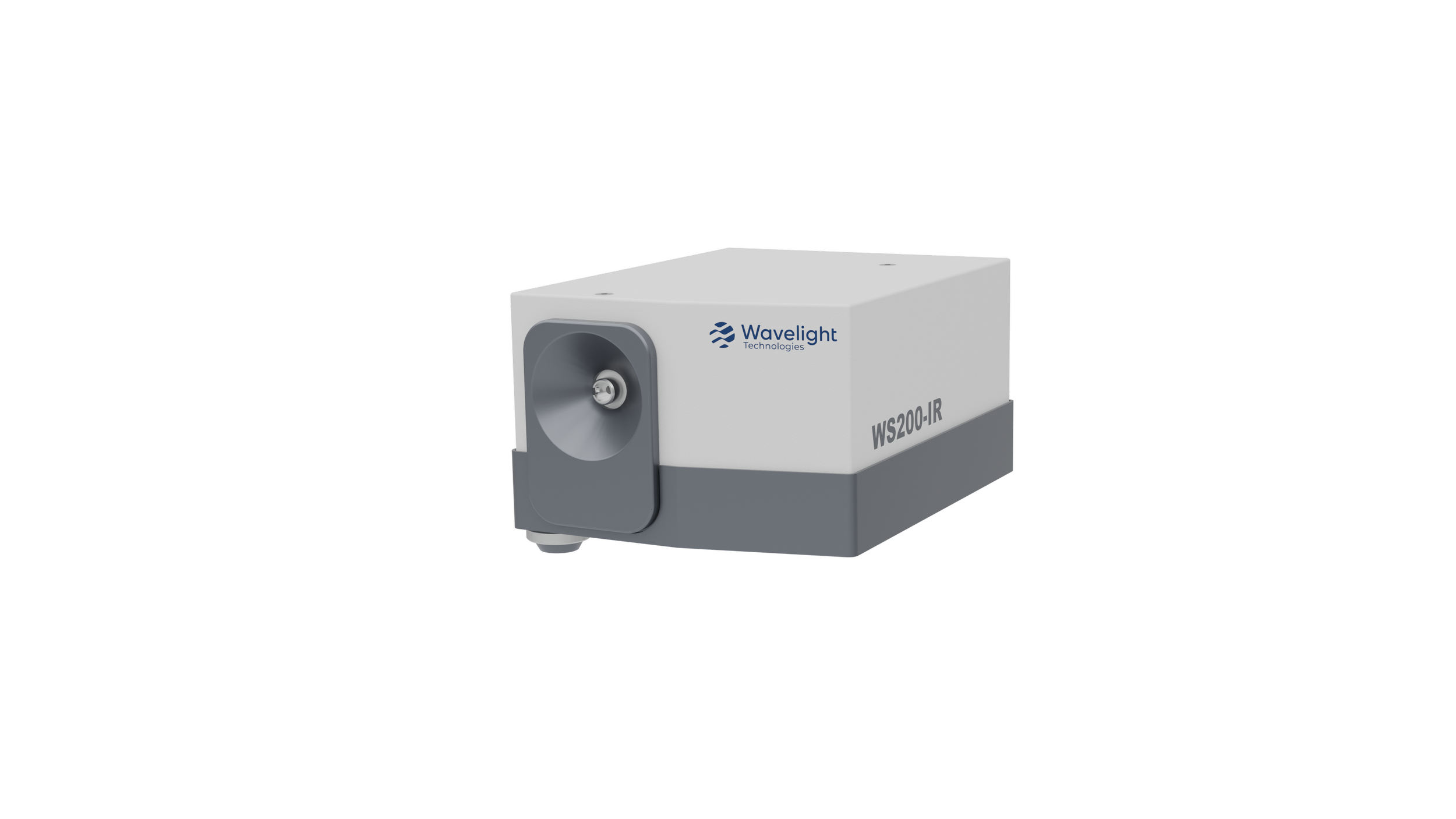
WS200-IR
-
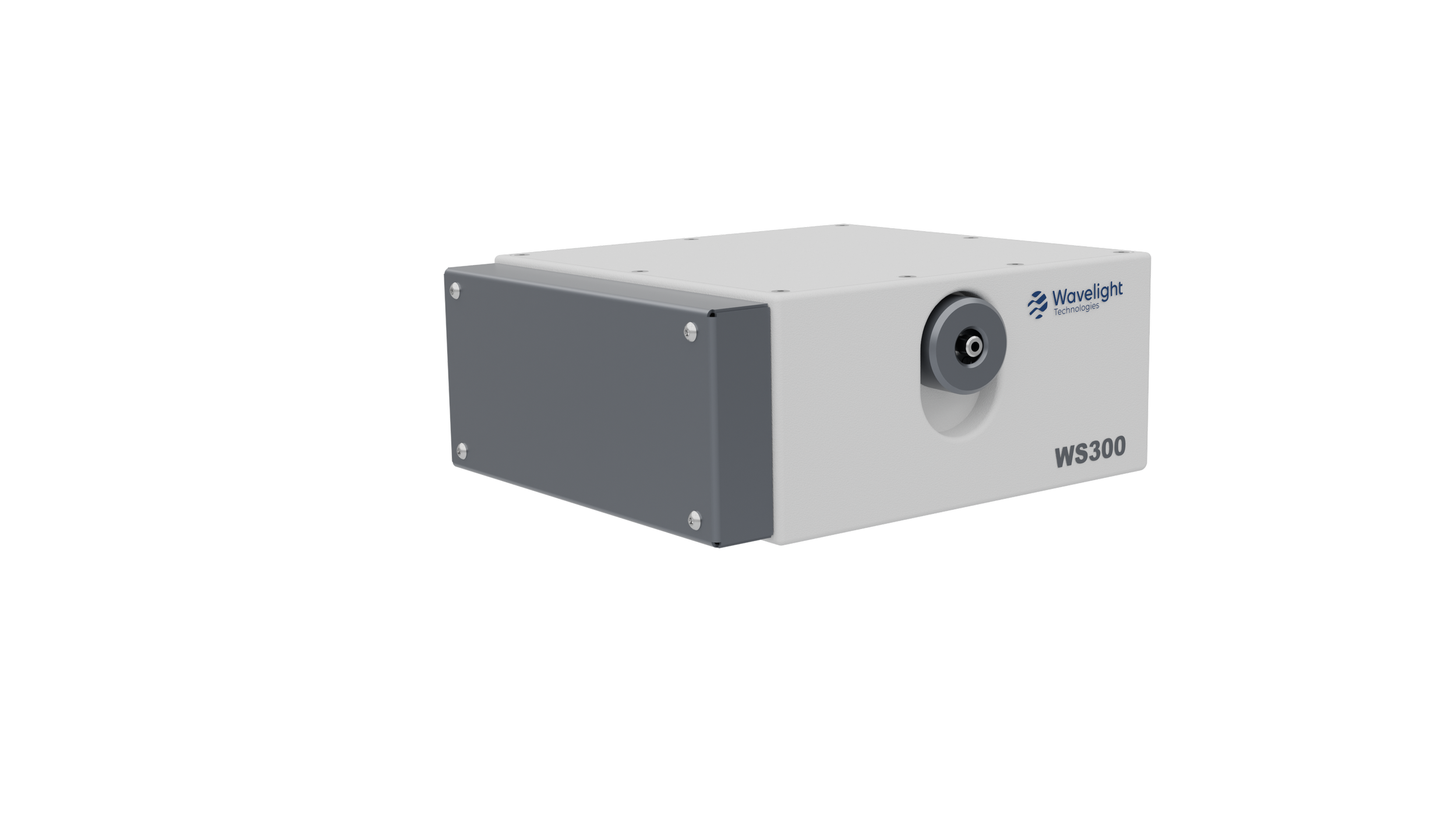
WS300
-
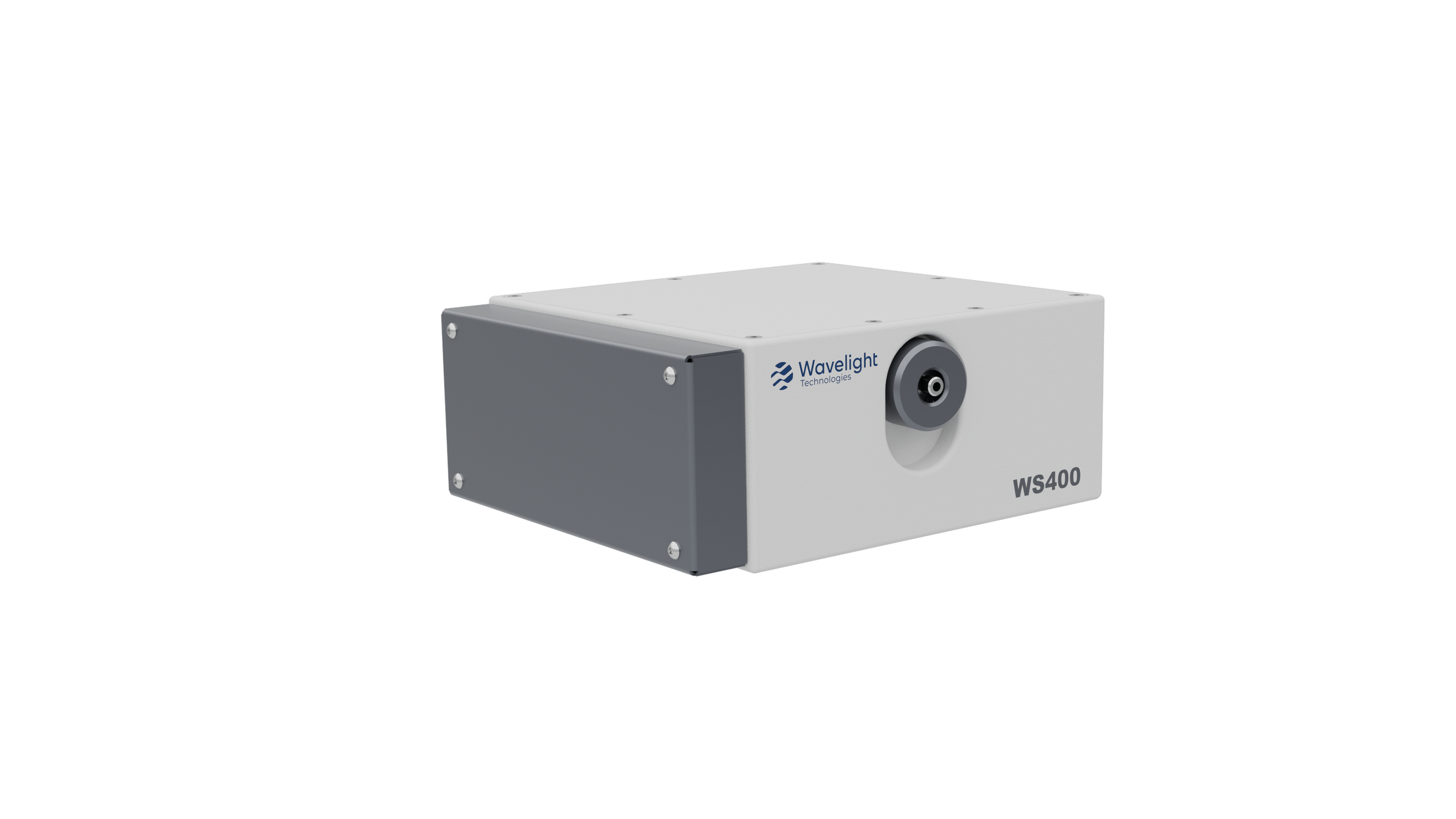
WS400
-
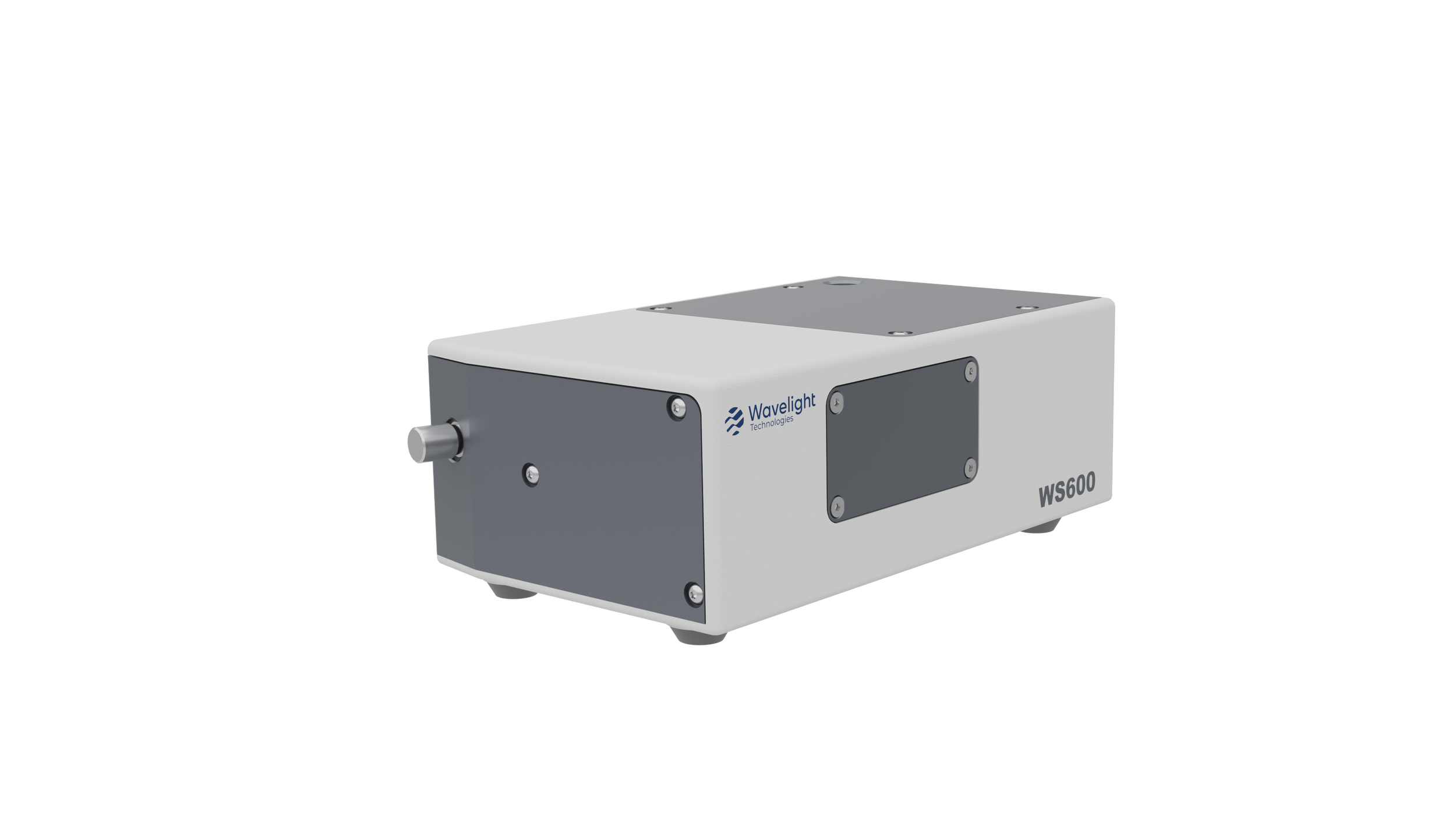
WS600